
How to buy a car from Korea
From the car you found to the car at your port. What we need from you before you pay, and what happens to your car after you do.
Before you pay
Find a car and ask for a price
Pick something from our catalogue, or send us a link from Encar, KCar or any Korean auction. We confirm it is still available, check it is legally exportable, and send you a price delivered to your port.
Condition review, before you commit
We review the Korean performance-check record and the insurance accident history, and we can inspect the car in person before you commit. You see the findings before any money moves.
A used car is a used car. Inspection lowers your risk substantially; it cannot make a ten-year-old vehicle new, and we will tell you plainly when a car is not worth buying.
You approve, and we invoice you
If the car checks out and the price works, you tell us to go ahead and we issue the invoice. Nothing in the next section happens until that transfer lands, which is why it starts where it does.
What happens after you pay
Most of our buyers send money to Korea without ever standing in our office. These are the eight stages between your transfer and your car at your own port, and what each one puts in your hands. If a stage has not produced its paperwork or its photographs, it has not happened yet.
Vehicle purchase
We buy the car on your behalf at the agreed price and take it off the Korean market, so it cannot be sold to somebody else while you wait. The seller is paid by Rohan Company.
What you receive
- Purchase confirmation showing the VIN and the agreed price
- Invoice issued by Rohan Company
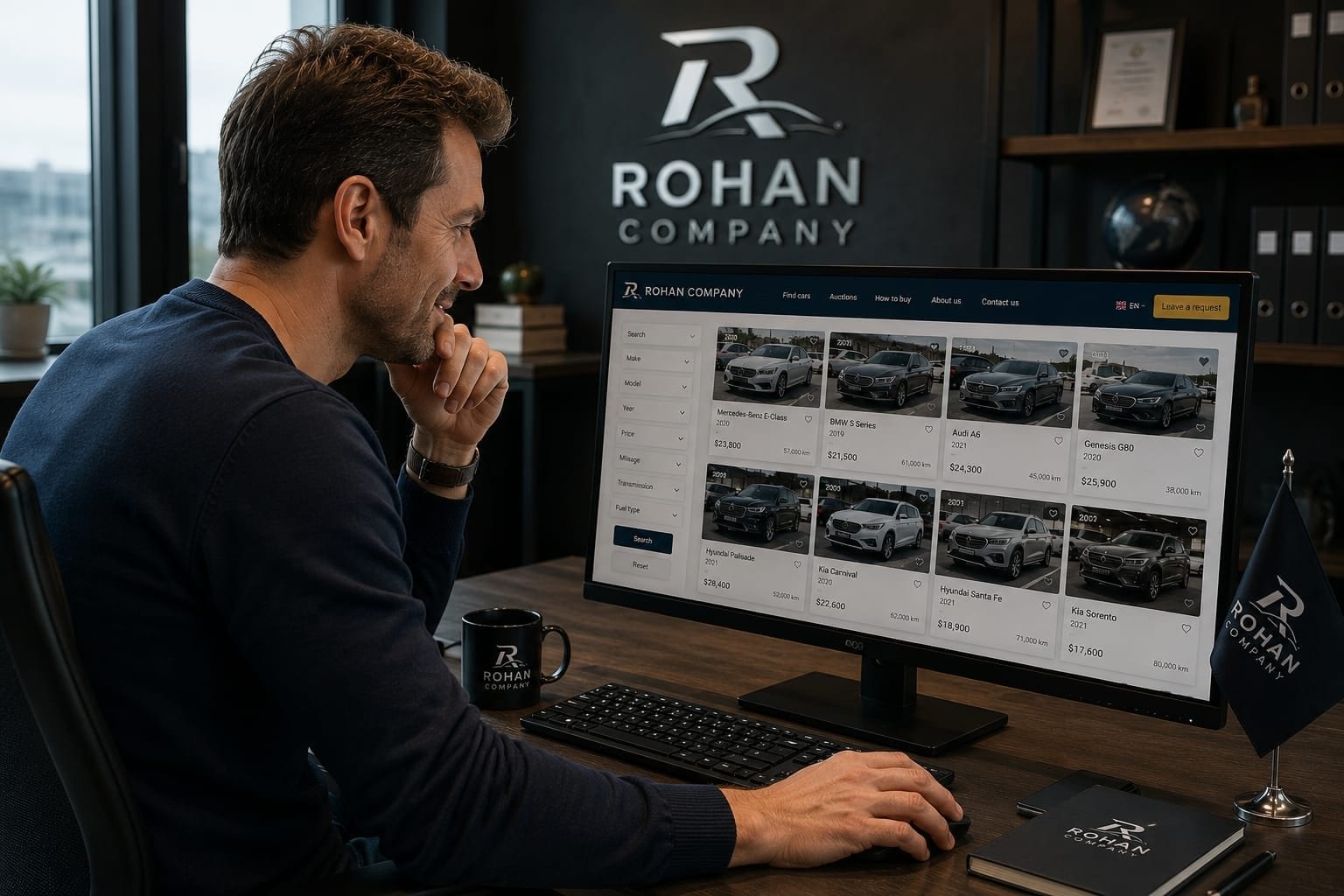
Vehicle inspection
Engine bay, underbody, panel gaps, tyres, interior, and the odometer read against the statutory record. We then check that record and the insurance accident history against what the inspection actually found, and write down where they disagree.
What you receive
- Inspection photo set, damage and wear included
- The Korean performance-check record (성능·상태점검기록부)
- Condition verification notes, in your language
- Insurance accident history, itemised claim by claim
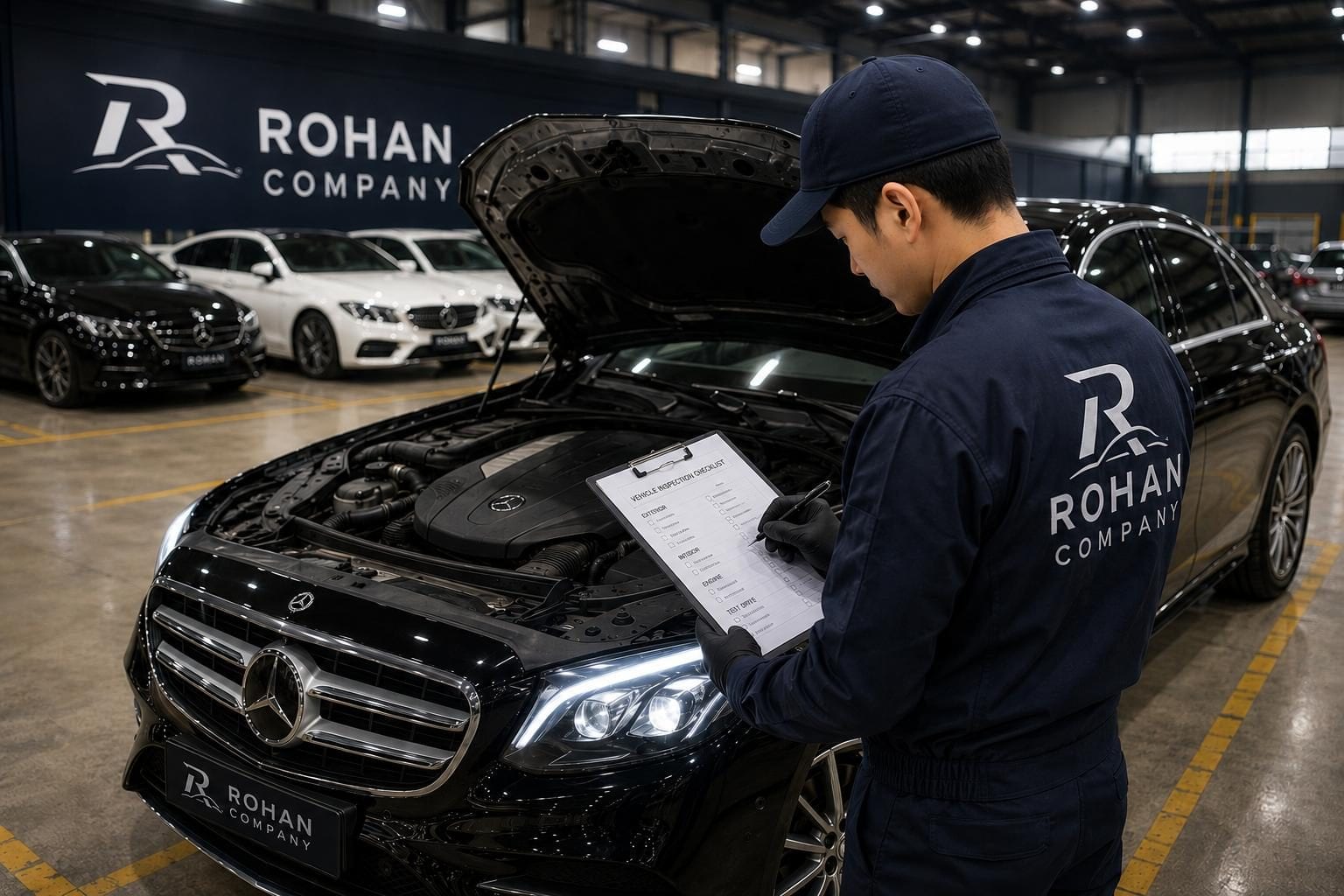
Export documentation
The vehicle is de-registered in Korea and cleared for export. This is the paperwork your customs broker will ask for by name; the full list of what lands in your hands is under “Documents you receive” below.
What you receive
- A scan of each document as it is issued
- The originals, couriered once the vessel has sailed
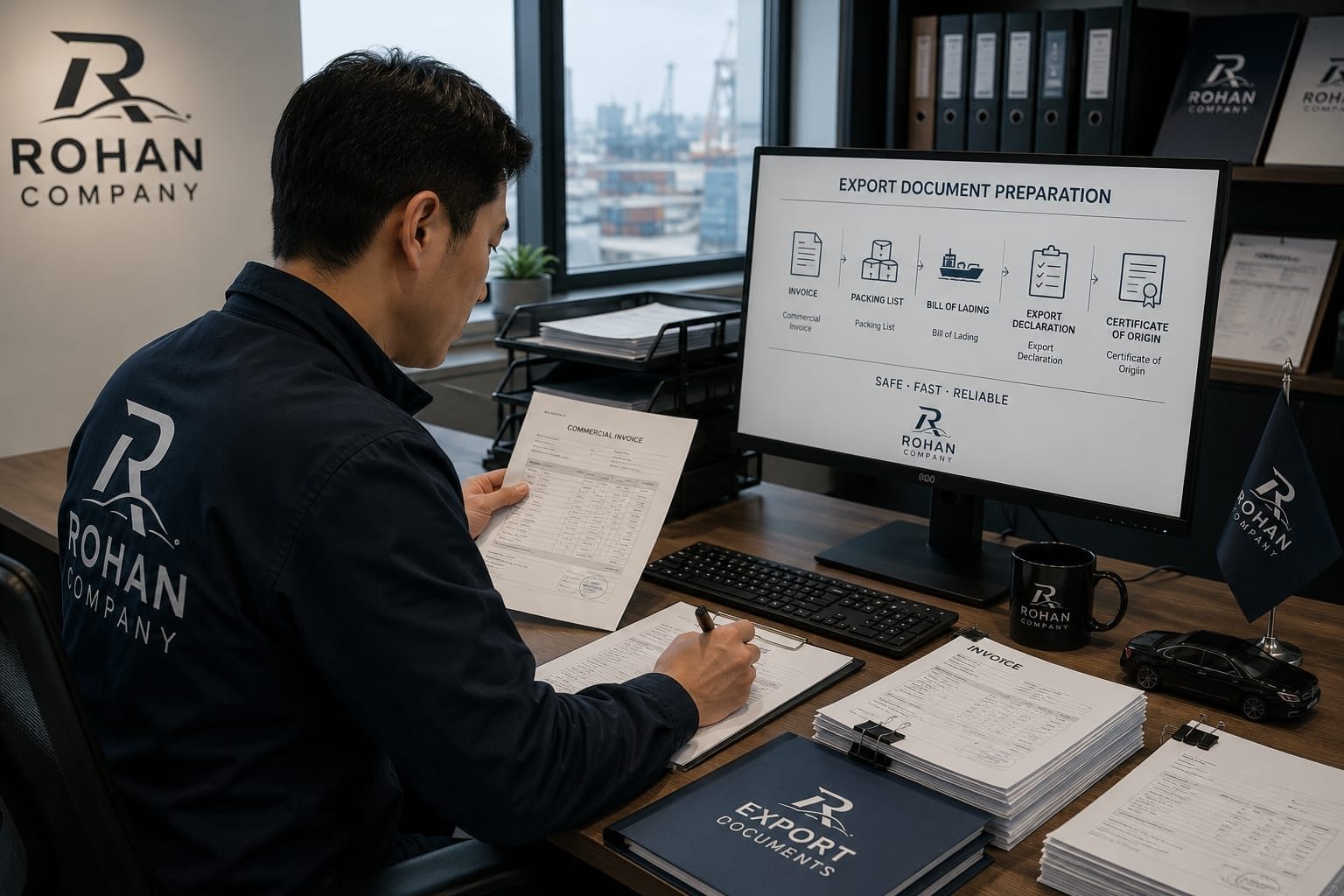
Transport to the port
The car moves to the export yard and then to the loading port — Busan, Incheon or Pyeongtaek, depending on your sailing. It is photographed at handover.
What you receive
- Handover photographs at the yard and at the port
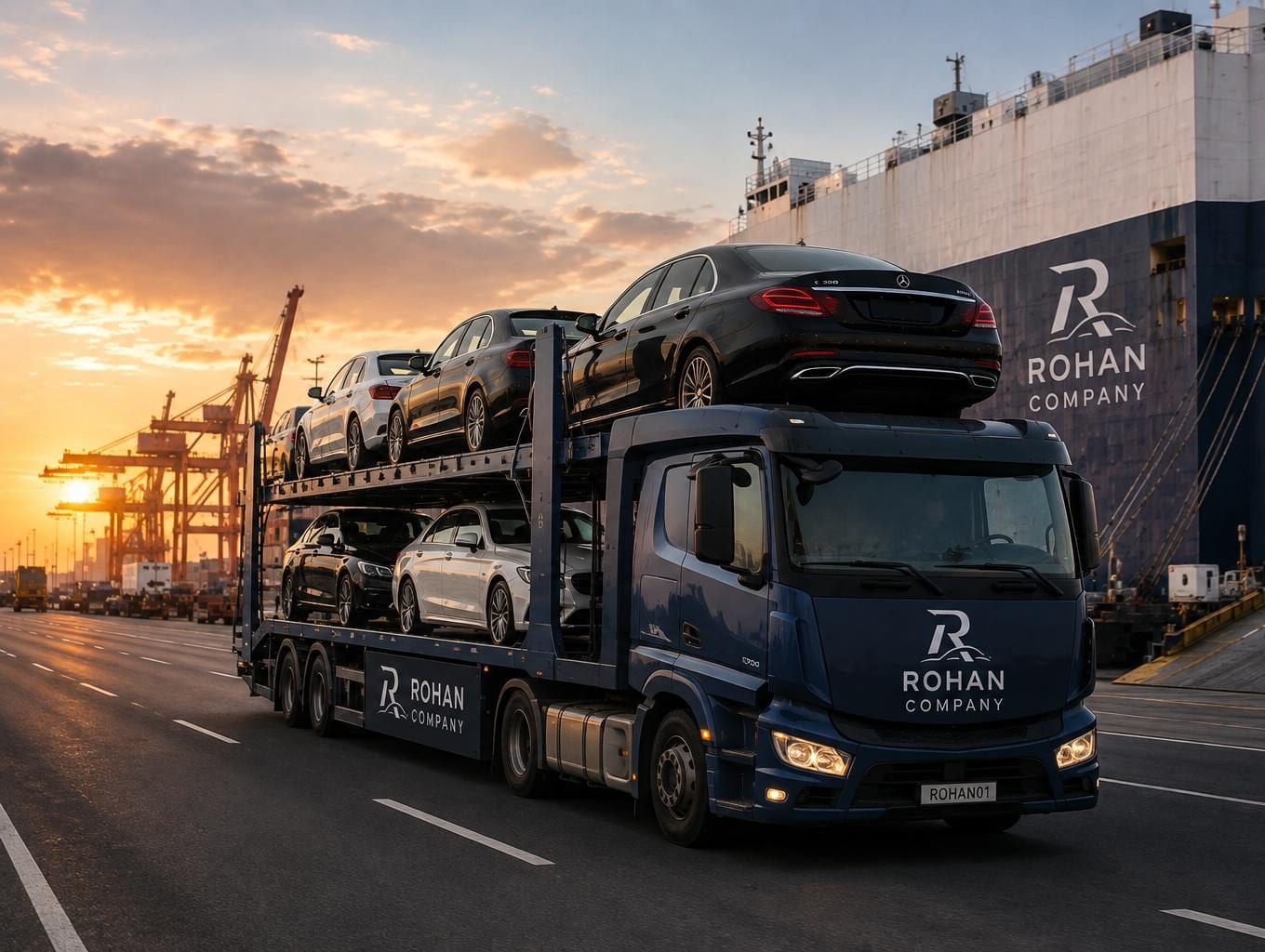
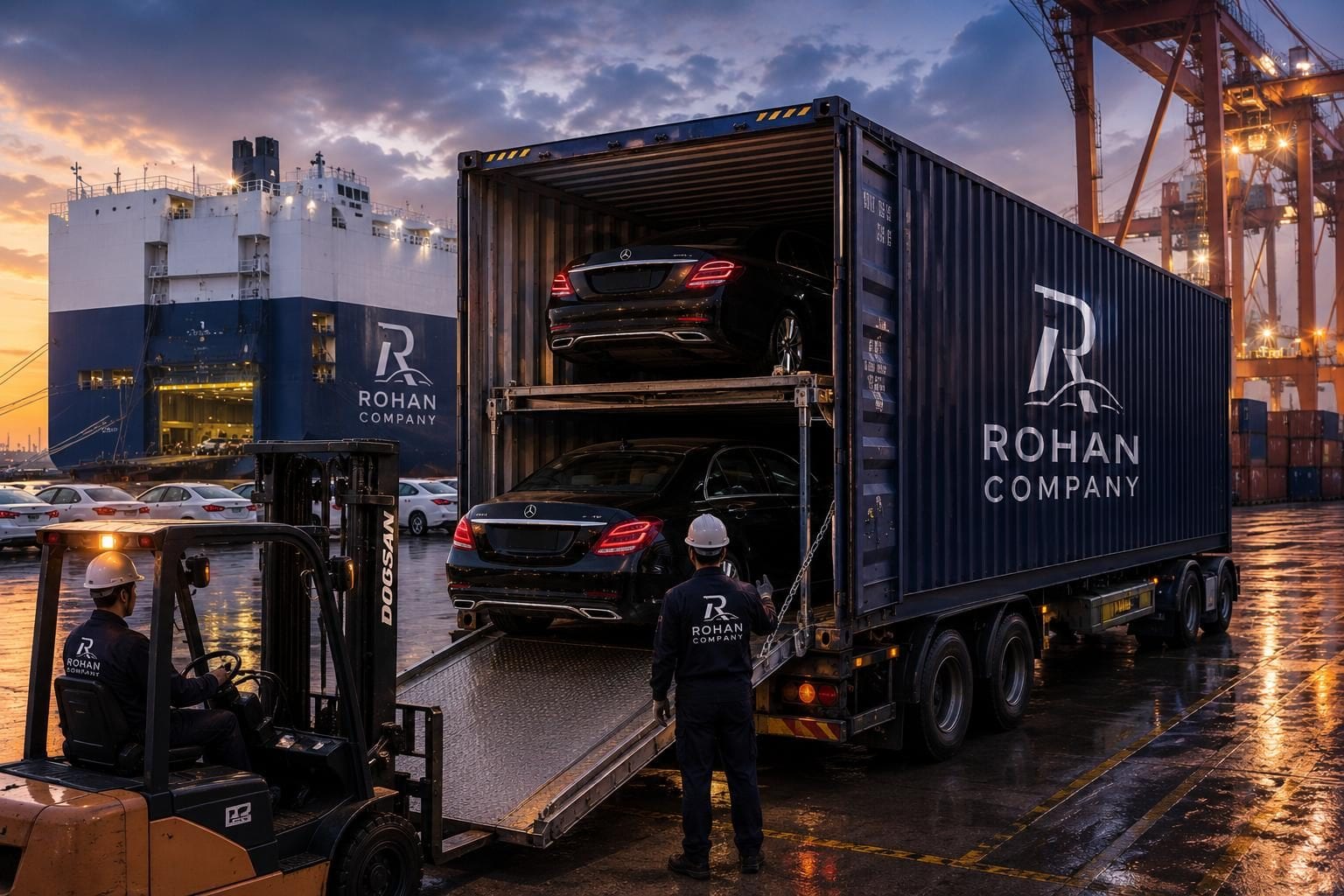
Container or RoRo loading
At the terminal the car is either driven aboard under its own power or secured inside a container. Which of the two depends on the sailing and on the vehicle, and you are told which before it happens.
What you receive
- Confirmation of the loading method — RoRo or container
- The booking reference for the sailing
International shipping
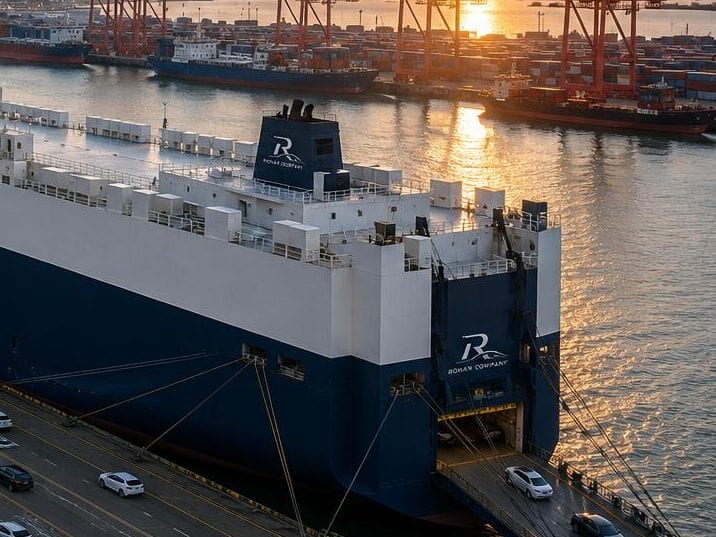
The vessel sails for your port. Space for used vehicles is allocated by the carrier and dates do move; you hear that from us when it happens, not when you ask.
What you receive
- Vessel name and voyage number
- Estimated arrival date at your port
VIN tracking
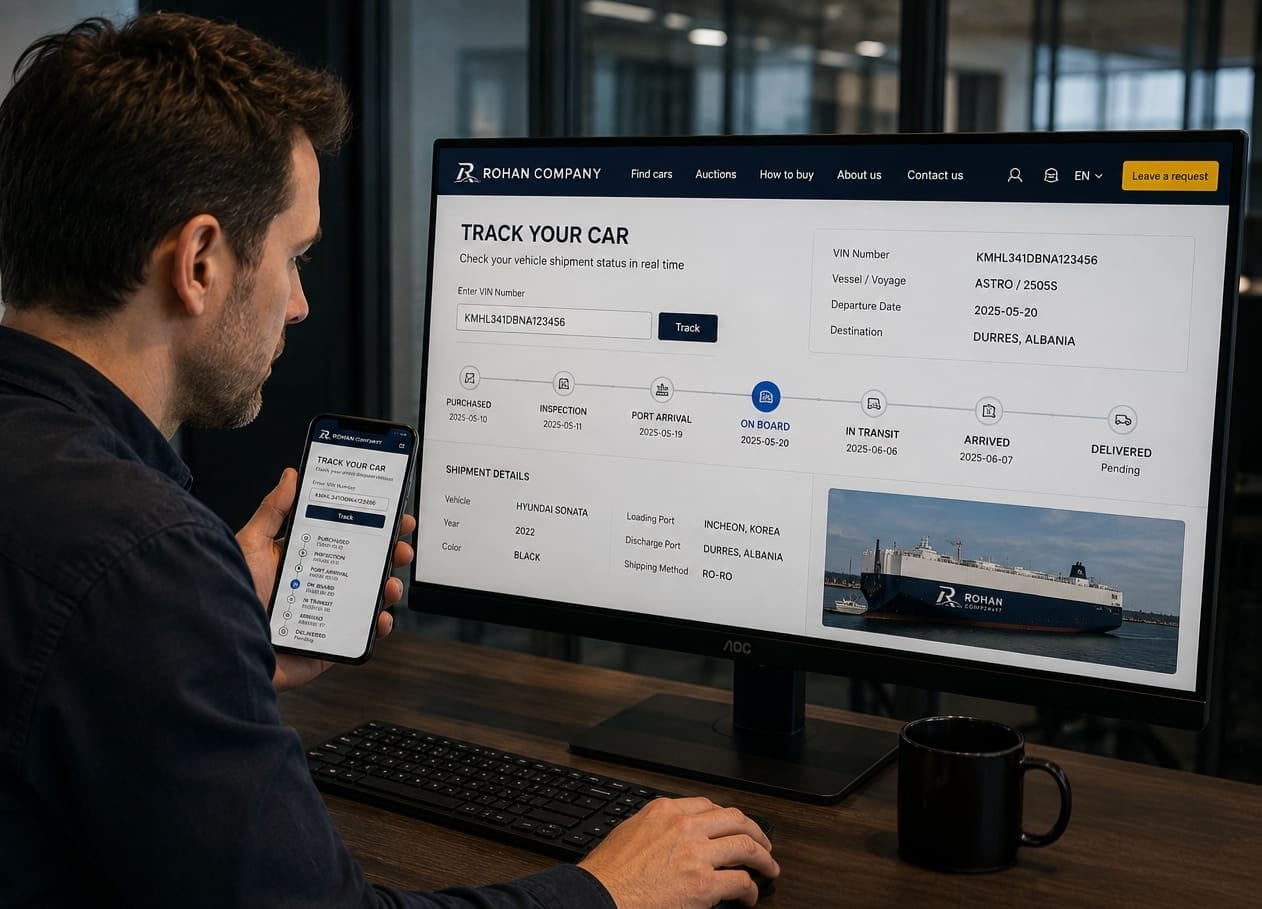
From the moment the booking is confirmed, your shipment is visible on this site by VIN. Finding out where your car is does not require writing to a manager and waiting for the reply.
What you receive
- A tracking link that works from the VIN alone
Arrival and vehicle delivery
The vessel arrives and your car is discharged at your port. Import clearance is done by you or your own customs broker under the rules of your country — what we do is make sure they already hold every paper they will ask for.
What you receive
- Courier tracking for the original documents
- Confirmation of how the bill of lading is released — couriered originals or telex release
- The complete shipment file: vessel, bill of lading number, and every document issued for the car
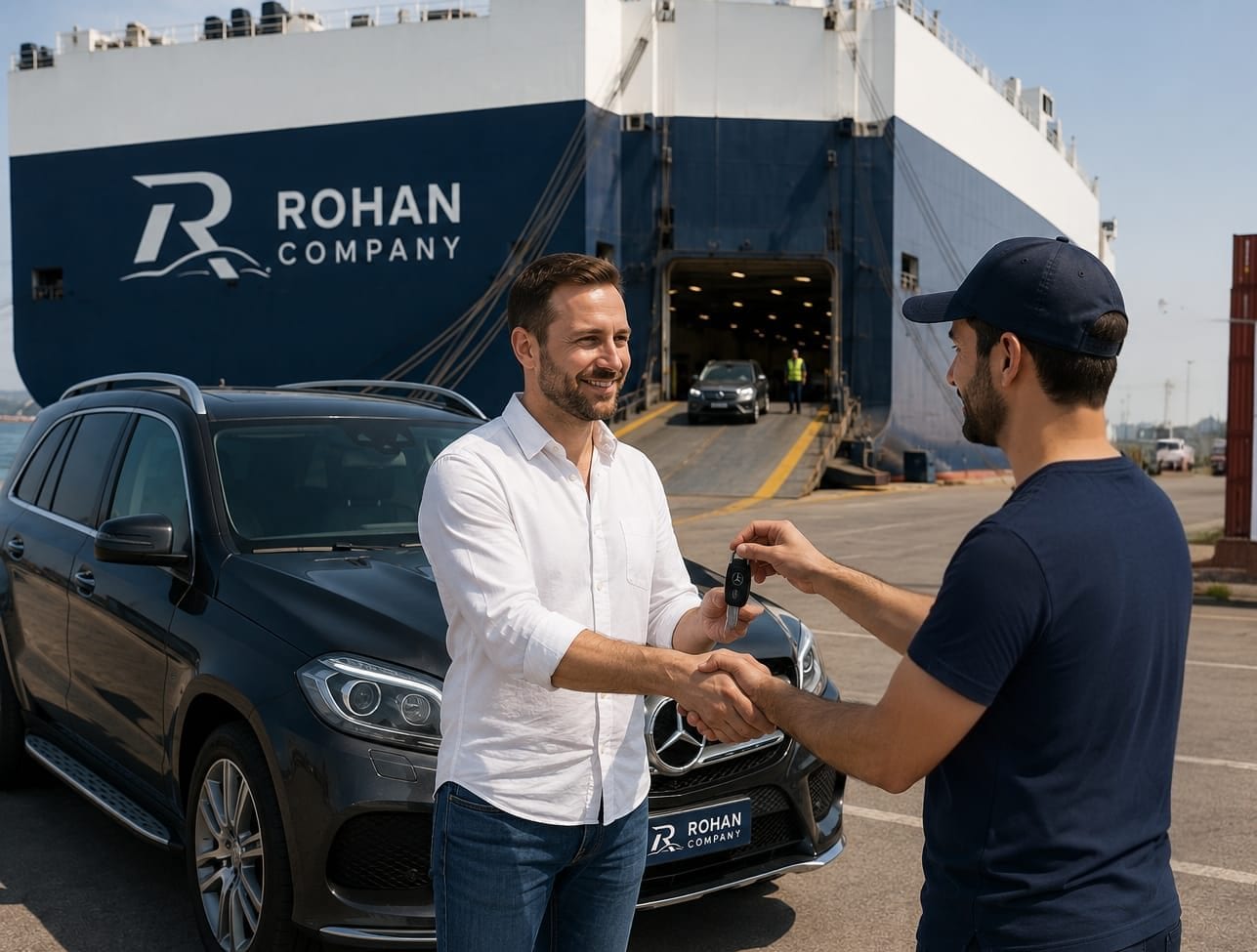
The pictures beside the stages are illustrations of the process, not photographs of our own yard or our own vessels. Photographs of the export itself are still being collected, and are published here as each one is verified.
Documents you receive
Sent by courier after the vessel departs. This is what your customs broker will ask you for.
- Bill of Lading
- Commercial Invoice
- Vehicle registration copy
- English translation of the registration
- Original de-registration certificate
- English translation of the de-registration certificate
- Certificate of Origin
- Export Declaration
Before you commit, check these
Every Korean vehicle is left-hand drive
If your country requires right-hand drive — Kenya, Tanzania, Uganda and others — Korea is not the right source for you. We would rather tell you now than after a deposit.
There is no European COC
Korean vehicles are not issued a Certificate of Conformity. If you are importing into the EU, homologation and registration are yours to arrange. We supply the registration copy, the de-registration certificate and certified English translations.
Your country may have an age or emissions limit
Many destinations restrict vehicles over a certain age, or by engine size or emissions standard. Check your own import rules before choosing a car — those rules are set by your customs authority, not by us.
Used vehicles are sold as they are
Condition depends entirely on how the previous owner used and maintained the car. Read the mileage, the condition report and the accident history carefully. If you need a risk-free vehicle, buy new locally.
What we check on every car
You cannot inspect the car yourself, so the next best thing is the paperwork Korea already requires — and our reading of it, in your language.
Performance-check record
Korea’s statutory condition report (성능·상태점검기록부). It covers engine, transmission, oil leaks, structural repair, flood damage and recall status. We read it and translate what it says.
Insurance accident history
Who claimed, for what, and how much. A paint-only claim and a structural repair both show as "an accident" in a summary — the detail is what lets you tell them apart.
Panel-by-panel condition
Which panels have been replaced, repaired or corroded, mapped onto a diagram of the car rather than buried in a Korean table.
On-site inspection, on request
For anything the paperwork cannot settle, we go and look at the car before you commit, and send you what we find.
Cars we have delivered
Photographs from our own export records: the car at our yard in Korea, usually with the buyer it was bought for, on the day it was handed over. We publish the model and where it went, and nothing else — no names, no quotes put in anybody’s mouth.
Renault Samsung SM5, delivered to Libya Kia Rio, delivered to Libya Hyundai Porter, delivered to Jordan Hyundai Accent, delivered to Palestine Kia Soul, delivered to Palestine Hyundai Sonata Hybrid, delivered to Iraq Kia Pride, delivered to Palestine Hyundai Starex, delivered to Jordan Hyundai Accent, delivered to Palestine Kia Bongo III, delivered to Costa Rica
Payment safety
Payment is by bank transfer (T/T SWIFT) against an invoice we issue. We confirm every transfer in writing.